

Published on: September 9, 2026
Cutting Through the Noise: The Best Trading Apps in the UAE, Compared
The Best Trading Apps in the UAE, Compared
The world of online trading has exploded — new platforms pop up every week, each promising smarter tools, faster execution, and bigger rewards. For traders, that’s both exciting and exhausting. Which ones are actually reliable? Which offer real value instead of marketing fluff? And most importantly, which platforms truly respect your time, goals, and most of all — your money?
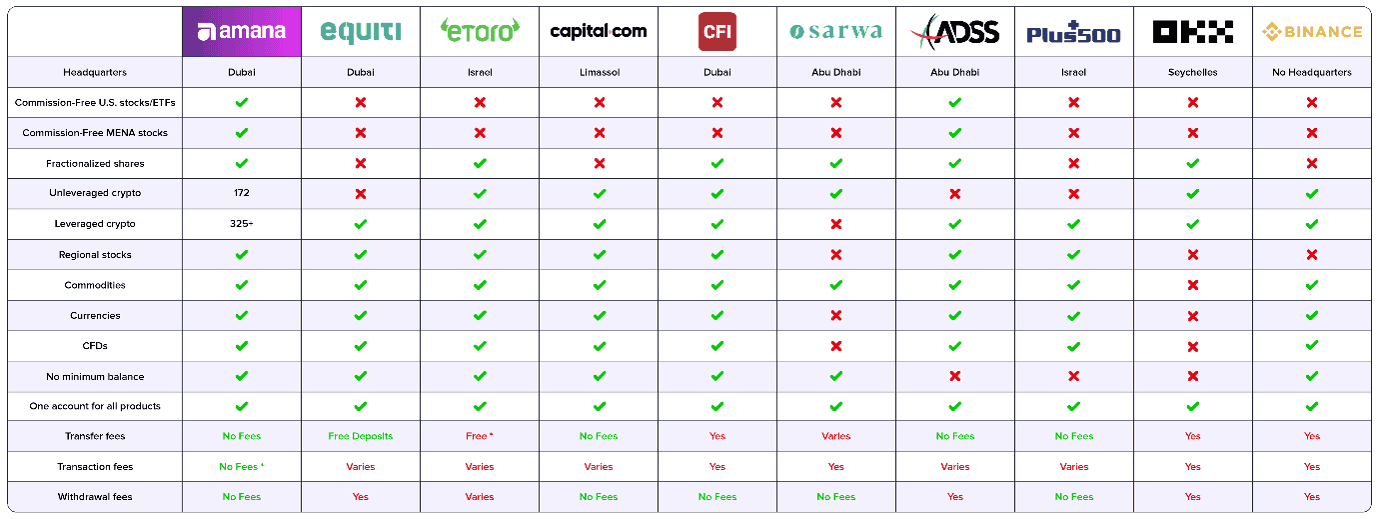
To cut through the noise, we’ve done the digging for you. We reviewed user feedback, combed through financial reports and expert rankings, and compared features side by side — from commission to product range, regional shares, and fractional shares. And of course, we’ve stacked them all against amana — the homegrown platform that’s quietly redefining what modern trading and investing in the UAE can look like.
So, let’s dive into the best online trading apps in the UAE — and see how they measure up where it really counts.
 Karim Farra
 Ziad Aboujeb
Founded: 2010
HQ: Dubai
Regulated by: CMA (UAE), DFSA (Dubai), CMA (Lebanon), FSC (Mauritius), LFSA (Malaysia), and CySEC (Cyprus)
amana is a trading and investing platform built to remove friction, cut costs, and give users direct access to global markets — without the usual complications. With commission-free investing in stocks and ETFs, spreads up to 70% lower for active traders, and 24/7 support in English and Arabic, it’s designed for both long-term investors and active traders alike.
When it comes to investing, amana makes ownership simple. Traders and investors can buy thousands of exchange-traded U.S. stocks and ETFs — all SIPC-insured — alongside hundreds of exchange-traded MENA stocks like Salik, DEWA, Emaar, and Aramco, all with no commission charged to you by amana.
The ability to automate pre-defined or fully user customized investment plans at zero management cost lets users invest monthly in curated portfolios, from Sharia-compliant stocks and ETFs to tech heavyweights (MAG7) and even top crypto assets. No gimmicks, no extra management fees — just transparent monthly investing that feels modern and human.
Active traders have a real edge too. The platform offers more than 6,800 assets, including gold, oil, FX, single stocks, crypto, and equity indices. Active traders can earn cashback rebates of up to 20% of their spread costs, while advanced TradingView charting and fast execution make amana both powerful and precise. It’s the kind of infrastructure usually reserved for big institutions — now in your pocket.
And then there’s crypto — over 325 coins, available as spot trading with no leverage, or with up to 25x leverage through perpetual futures, and the ability to fund accounts directly with BTC, ETH, or stablecoins. It’s one of the broadest crypto selections in the region, built into the same ecosystem alongside exchange-traded stocks and ETFs. As digital assets evolve, amana is making sure its users evolve with them — smarter, faster, and with fewer limits than ever.
Beyond trading and investing, amana offers educational content through its partnership with Real Vision, “the Netflix of finance,” known for in-depth market analysis and interviews. Their content covers topics ranging from macroeconomics and investing basics to technical analysis and options trading.
What Makes amana Different:
While other platforms offer only CFD derivative trading, crypto or focus on robo-advisory — often at high fees — amana combines commission-free investing, active trading, and crypto access within a single platform, giving users access to multiple global markets through one account. amana also offers monthly auto-investment plans with zero fees.
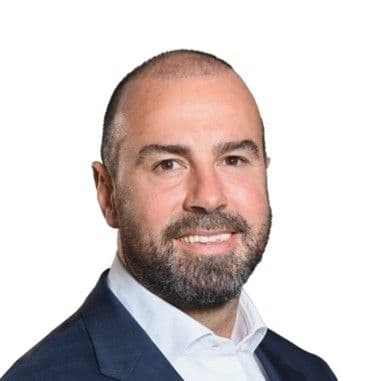 Iskandar Najjar
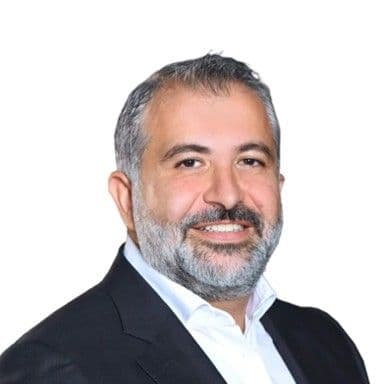 Mohammed AlAhmad Ketmawi
Founded: 2017
HQ: Dubai
Regulated by: CMA (UAE), FCA (UK), JSC (Jordan), CMA (Kenya), CySEC (Cyprus), CBA (Armenia), and FSA (Seychelles)
Equiti is a trading platform focused primarily on leveraged derivatives trading (CFDs), offering fast execution, tight spreads, and transparent pricing across instruments like currencies, commodities, and indices.
The platform currently only offers CFD trading. It does not currently offer exchange-traded stocks or ETFs, fractional shares, or unleveraged spot crypto for long-term investing.
For traders seeking leveraged market exposure, this structure can offer flexibility and speed. For investors looking to build long-term portfolios through direct ownership of assets, as well as those actively trading, Equiti’s scope may feel limited.
In addition, transaction costs depend heavily on the account type, and many accounts incur withdrawal fees of around U.S. $30 per bank wire transfer.
Key Difference vs amana:
Equiti is geared primarily toward leveraged CFD trading. amana, on the other hand, combines active trading with commission-free access to exchange-traded stocks and ETFs, offering greater flexibility for users who also want to invest.
 Yoni Assia
 Ronen Assia
  David Ring
Founded: 2007
HQ: Tel Aviv
Regulated by: FSRA (Abu Dhabi), FCA (UK), CySEC (Cyprus), ASIC (Australia), MAS (Singapore), FSA (Seychelles), and GFSC (Gibraltar)
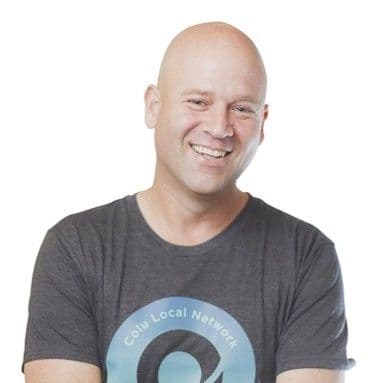
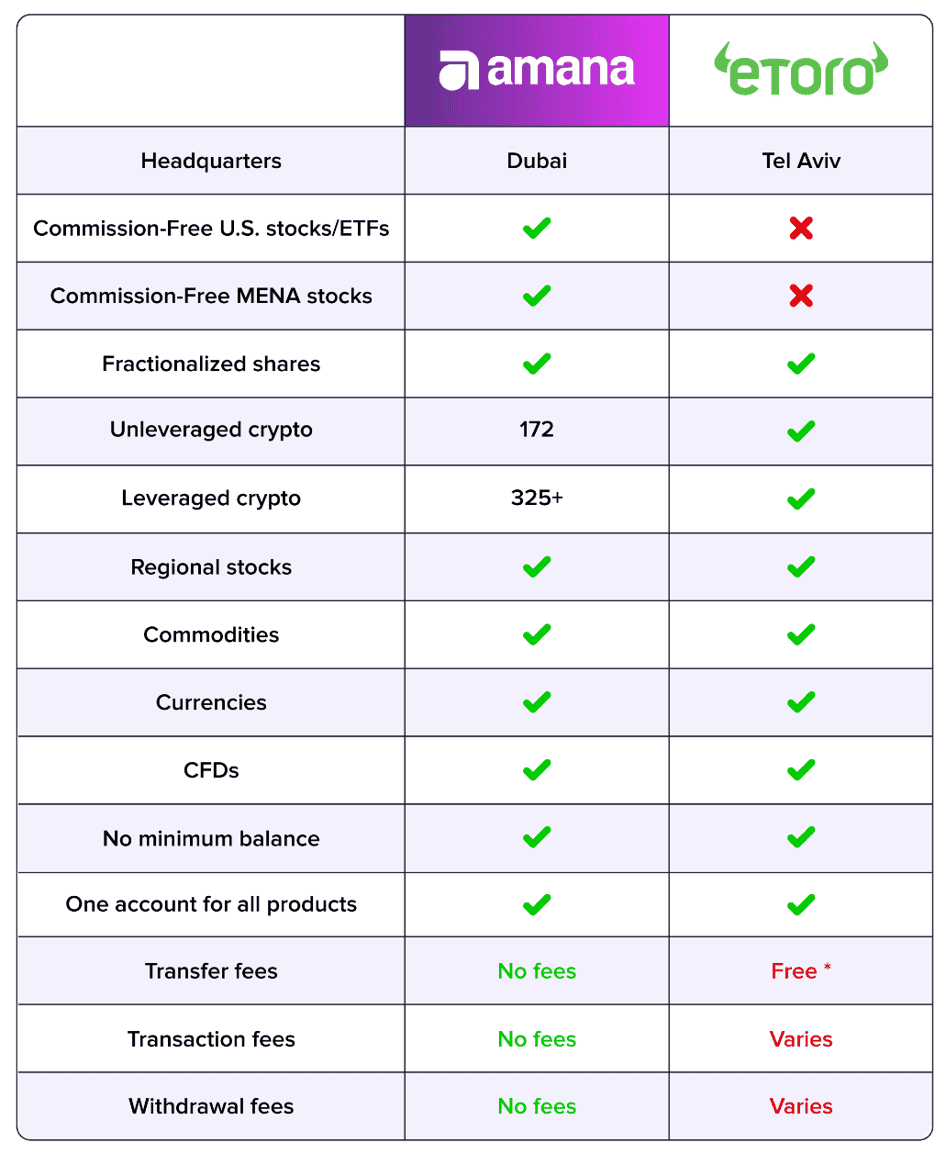
Founded in Tel Aviv by Israeli brothers Yoni and Ronen Assia, eToro is a social trading platform known for its community-driven marketing approach. Users can copy the trades of top investors, explore live market trends, and manage diversified portfolios in one place.
Its interface is sleek and intuitive, making trading accessible to both beginners and professionals. The platform also offers a wide range of assets, including regional stocks, commodities, currencies, and crypto.
Trading costs may be higher on certain markets compared with some competitors. In some comparisons, costs on FX and Oil (WTI) were observed to be up to 100% higher, around 300% higher on indices, and as much as 400% higher on gold — differences that may become more noticeable to higher-frequency traders. That said, eToro's pricing may become more competitive over time.
Some users have also reported a fixed $5 withdrawal fee for transfers from USD investment accounts to external accounts, alongside transaction fees that vary by asset. The platform also applies an inactivity fee of $10 per month.
Regional MENA exchange-traded share access is narrower compared with some multi-market platforms, and while the social features are engaging (copy trading), they can blur the line between strategy and speculation — something more experienced traders may find distracting. Finally, ticket charges for exchange traded stock trading are the standard at eToro.
Overall, eToro is often best suited to users who value social and community-driven trading features alongside market access but should review how the higher costs may impact their investing and trading returns.
Key Difference vs amana:
Both eToro and amana provide access to stocks, ETFs, crypto, and other global markets. However, amana focuses on delivering a lower-cost trading and investing experience, while eToro's key differentiator is its copy trading model — despite charging higher fees. For active traders and investors who prefer managing their own portfolios and trade at lower fees, amana offers a more direct approach.

 Viktor Prokopenya
Founded: 2016
HQ: Limassol
Regulated by: CMA (UAE), FCA (UK), CySEC (Cyprus), ASIC (Australia), CMA (Kenya), SCB (Bahamas), and FSA (Seychelles)
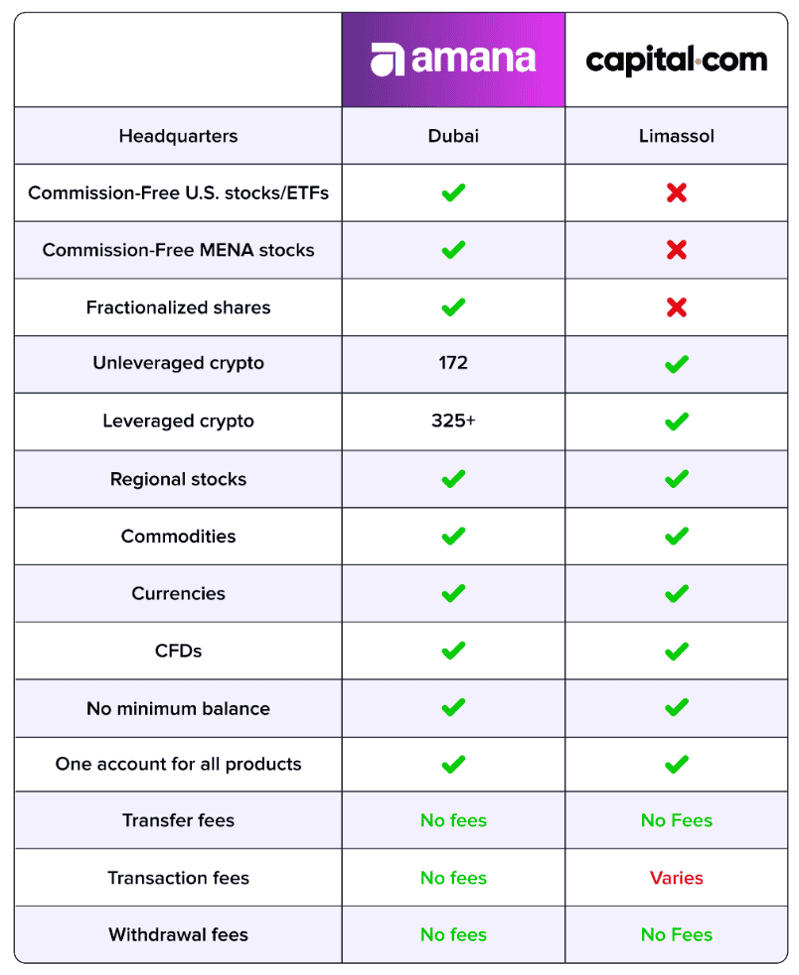
Capital.com is a leveraged derivative (CFD) trading platform offering web and mobile access to stocks, ETFs, commodities, currencies, and crypto. It’s known for its sleek, user-friendly interface, advanced charting tools, and fast withdrawals. With a low $20 minimum deposit and competitive spreads, the platform often appeals to newer traders looking for simplicity and accessibility when trying to day-trade the markets.
Similar to Equiti, Capital.com is designed primarily for leveraged trading rather than long-term investing through physical shares, although this is not always clear from its advertising. The platform does not currently provide directly owned shares through exchange-traded stocks and ETFs, commission-free U.S. and MENA shares, or fractional ownership.
For users focused primarily on active trading, Capital.com can offer a streamlined CFD-focused experience. Investors looking for direct ownership investing through exchange-traded products, however, may find the platform more limited.
Key Difference vs amana:
Like Equiti, Capital.com is a competitive option for active CFD traders. However, unlike amana, it doesn’t offer physical, exchange-traded stocks and ETFs (with zero commission), making it less suited to users who want to combine investing and active trading within one account.

 Eduardo Fakhoury
 Hisham Mansour
Founded: 2015
HQ: Dubai
Regulated by: DFSA (Dubai), CMA (UAE), FCA (UK), CySEC (Cyprus), FSCA (South Africa), JSC (Jordan), CMA (Lebanon), FRA (Egypt), FSC (Mauritius), and others.
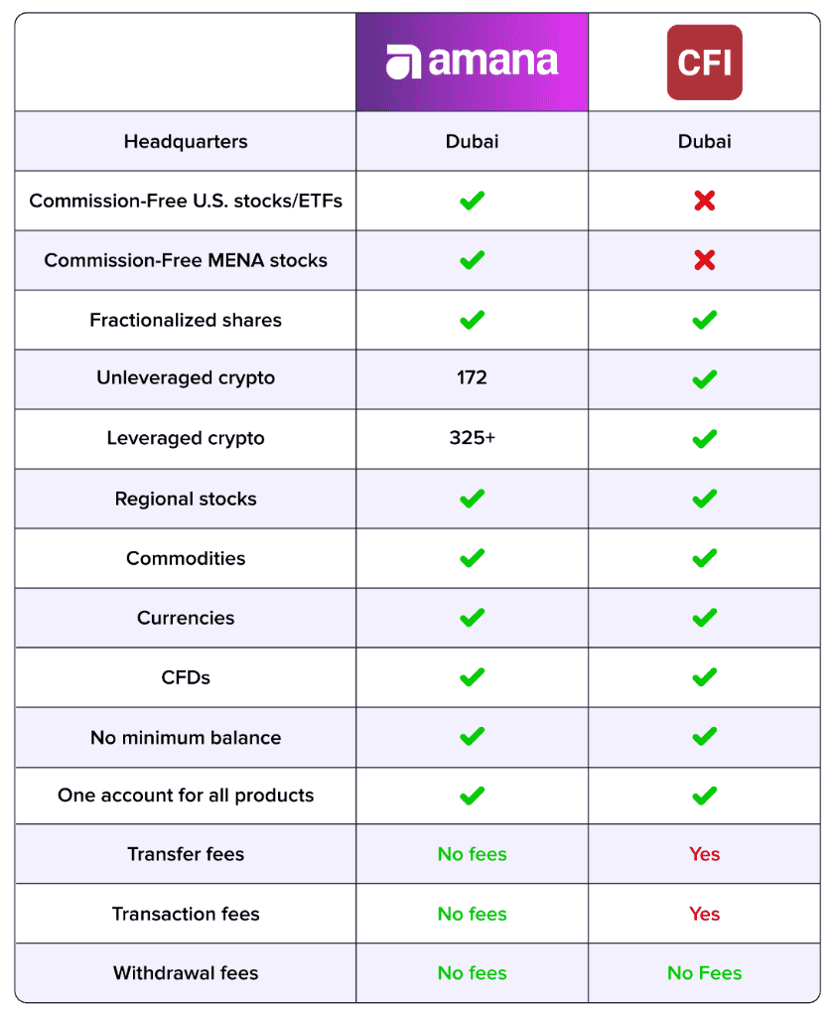
CFI is a global forex and CFD broker and market maker offering a wide range of trading products, including currencies, commodities, exchange traded stocks, stock options, and indices. The platform supports several trading environments — including MT4, MT5, cTrader, and a proprietary mobile app.
For some users, the overall structure can feel complex. With multiple trading platforms, different account types, and varying product access, it may not always be immediately clear which setup is required or what the full cost of trading will be.
While CFI does offer access to exchange-traded shares, this typically requires a separate account, and much of the core offering in the region centers around leveraged derivatives (CFD) trading. Traders have also noted that the platform lists fees such as a $75 transfer fee, a minimum $1 per trade, and around $0.005 per share in transaction costs, which may add up over time for more active traders.
Key Difference vs amana:
Both CFI and amana offer access to a wide range of markets and trading products. However, amana brings investing, trading, and crypto together within a single app and account experience, while CFI's offering is spread across multiple platforms and account structures, which may feel more complex for some users.

 Mark Chahwan
 Jad Sayegh
 Nadine Mezher
Founded: 2017
HQ: Abu Dhabi
Regulated by: FSRA (Abu Dhabi) and DFSA (Dubai)
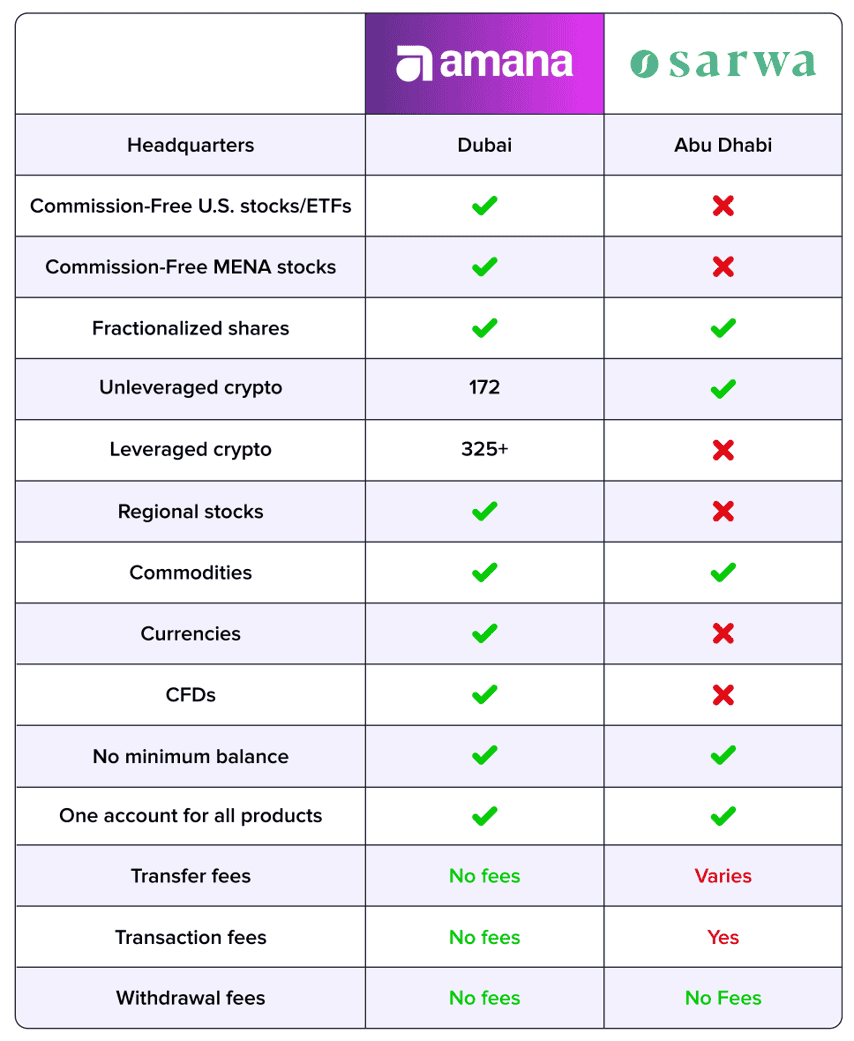
Sarwa is a robo-advisory and investing platform focused on making investing simple and accessible. With automated portfolios designed by Sarwa, built from ETFs and tailored to your goals, it’s a great choice for beginners who want simplified investing.
The platform combines smart technology with human oversight — portfolio managers track markets and rebalance your holdings as needed.
Sarwa’s pricing is higher compared with certain modern brokerage platforms. For example, stock trades carry a 0.25% commission (with a $1 minimum), options trades cost $4 per contract, and the platform requires a $500 minimum account balance.
More recently, Sarwa has expanded beyond pure robo-investing to include an active trading offering for U.S. stocks, options, and cryptocurrencies. As the platform has expanded, pricing remains high compared with many trading platforms in the region. While Sarwa can be competitive compared with traditional banks, its pricing tends to sit above that of many modern brokerage platforms.
Sarwa doesn’t offer commission-free U.S. and MENA stocks, commodities, forex, or leveraged multi-asset trading — making it better suited for long-term, portfolio-based investing rather than active traders seeking broad market access in a single account.
Key Difference vs amana:
Both platforms support long-term investors, but Sarwa is designed primarily for passive investing through automated portfolios and charges high transaction fees. amana offers a broader experience, combining investing with zero fees, trading, and crypto access within a single platform.
 Philippe Ghanem
 Mahmood Ebraheem Al Mahmood
Founded: 2011
HQ: Abu Dhabi
Regulated by: CMA (UAE) and CMA (Saudi Arabia)
ADSS is a multi-asset trading platform offering a broad selection of products — including forex, CFDs, commodities, and regional stocks. Its user-friendly interface is designed to support both newer and more experienced traders.
The company’s local presence and dedicated customer support make it a trusted name among MENA traders looking for personalized service and familiar market access.
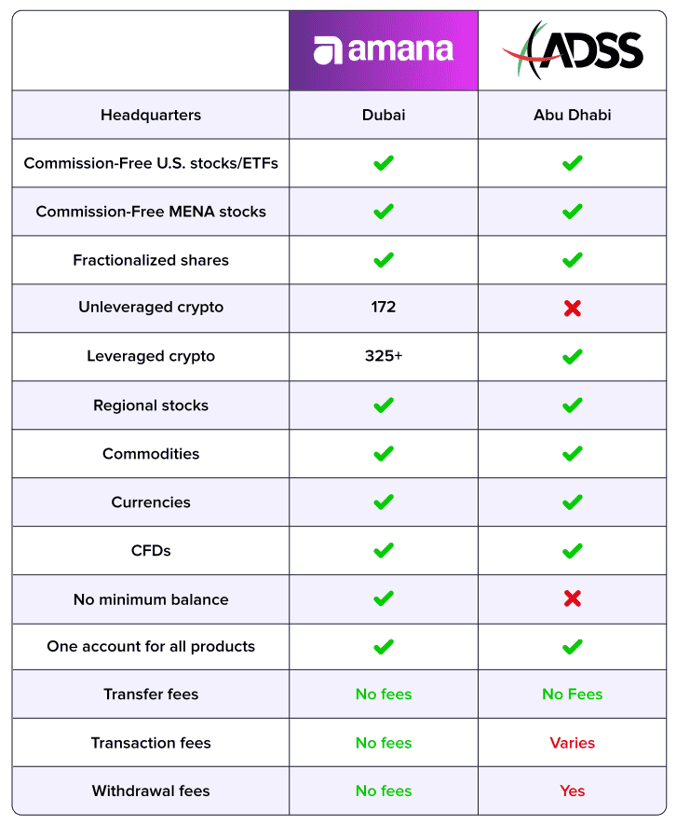
ADSS offers access to commission-free stocks, ETFs and CFDs. The platform also requires a minimum deposit ($100 for a classic account, $25,000 for an Elite account) to start, which may make it less flexible for users seeking a single low-cost platform to manage all their assets.
Key Difference vs amana:
Both platforms offer access to multiple markets and serve traders across the MENA region. However, amana combines active trading, commission-free investing, and crypto access within a single account, while ADSS remains more focused on traditional forex and CFD trading.
 Alon Gonen
 Gal Haber
 Elad Ben-Izhak
 Omer Elazari
& Shlomi Weizmann, Shimon Sofe
Founded: 2008
HQ: Haifa
Regulated by: DFSA (Dubai), FCA (UK), ASIC (Australia), CySEC (Cyprus), MAS (Singapore), FMA (New Zealand), JFSA (Japan), and CIRO (Canada)
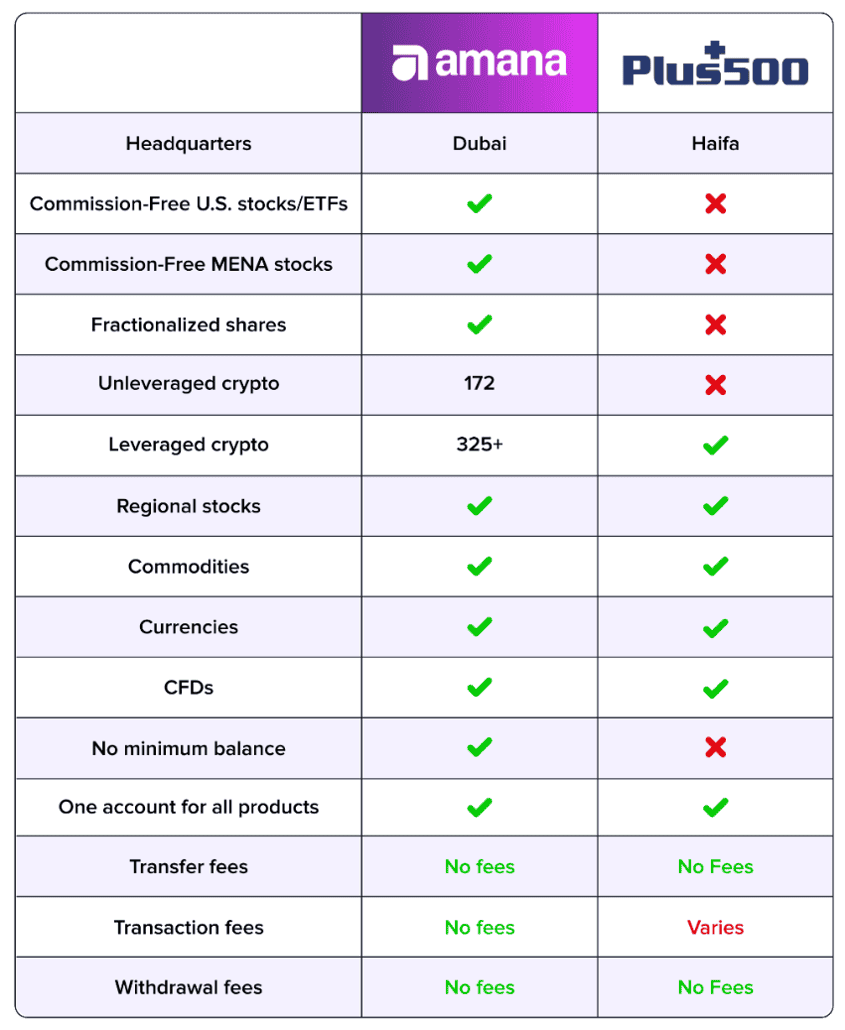
Based in Haifa and founded by a group of Israeli investors, Plus500 is a trading platform known for its clean interface and ease of use, making it especially appealing to beginners. It offers access to a wide range of leveraged derivatives (CFDs) — from forex and global stocks to commodities, indices, and regional shares — all within a simple, intuitive environment.
Pricing may be less competitive compared with some modern brokerage platforms. For example, spreads on certain markets — such as gold — can be around 100% higher than some competitors, which increases trading costs for more active traders.
Additionally, Plus500 requires a minimum balance, and will charge a Currency Conversion Fee for all trades on assets denominated in a currency different from the currency of your account.
Like several CFD-focused platforms, Plus500 is designed primarily for active trading rather than long-term investing. The platform does not currently offer exchange-traded stocks and ETFs, commission-free structures, fractional investing, or unleveraged crypto products that some multi-asset investment platforms provide.
For active traders focused primarily on CFDs, Plus500 may still appeal because of its simplicity and broad market access. However, users looking to combine active trading with long-term investing through exchange-traded stocks and ETFs may find the platform’s offering more limited.
Key Difference vs amana:
While both platforms cater to active traders, amana combines competitive pricing with commission-free investing in exchange-traded stocks and ETFs. Plus500 is primarily a CFD trading platform and may be less suitable for users looking to combine active trading with long-term investing.

 Mingxing “Star” Xu
Founded: 2017
HQ: Seychelles
Regulated by: VARA (Dubai)
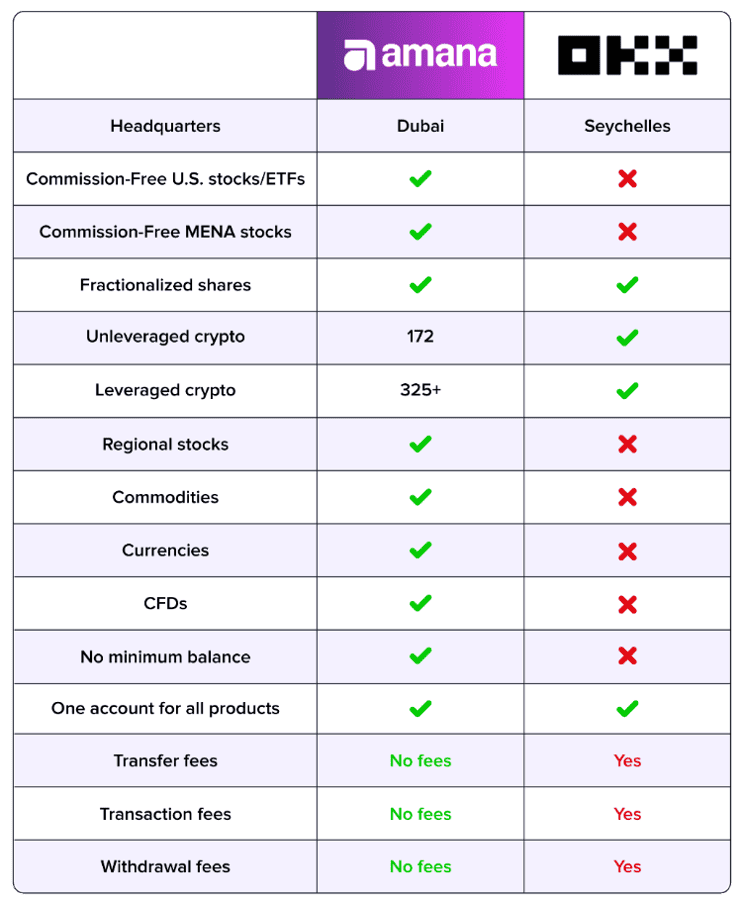
OKX is a crypto trading platform and exchange offering a wide range of digital assets and trading pairs. It provides access to margin and derivatives products such as options, futures, and perpetual contracts, alongside services in DeFi, crypto lending, and other on-chain tools. This creates a comprehensive ecosystem for users seeking both active trading and advanced crypto exposure.
That said, OKX remains firmly focused on cryptocurrency markets. The platform does not offer commission-free U.S. stocks or ETFs, MENA or regional equities, nor access to commodities, currencies, or CFDs, keeping its platform firmly crypto-focused.
While spreads on major cryptocurrencies can appear competitive, commissions, funding charges, and other transaction fees may increase overall trading costs depending on activity and product usage. Some traders have noted that OKX applies transfer, transaction, and withdrawal fees across its platform, meaning costs can arise at multiple stages of trading.
This layered fee structure reflects OKX’s focus on advanced trading products, though the overall cost structure may take some time for newer users to navigate.
Key Difference vs amana:
Both OKX and amana offer access to a broad range of cryptocurrencies. However, while OKX applies commissions and other trading fees across many crypto products, amana incorporates costs into the spread and does not charge separate commissions on crypto trading. For many retail traders, this can result in a lower overall cost of trading on popular cryptocurrencies.
 Changpeng Zhao, Yi He
Founded: 2017
HQ: No single global headquarters
Regulated by: FSRA (Abu Dhabi) and VARA (Dubai)
Binance is a trading platform and exchange offering access to 200+ cryptocurrencies, including Bitcoin and major altcoins, with relatively low headline trading fees compared to many global exchanges.
Binance Dubai supports AED deposits and withdrawals via bank transfers and cards, giving UAE users local on-ramps into crypto markets.
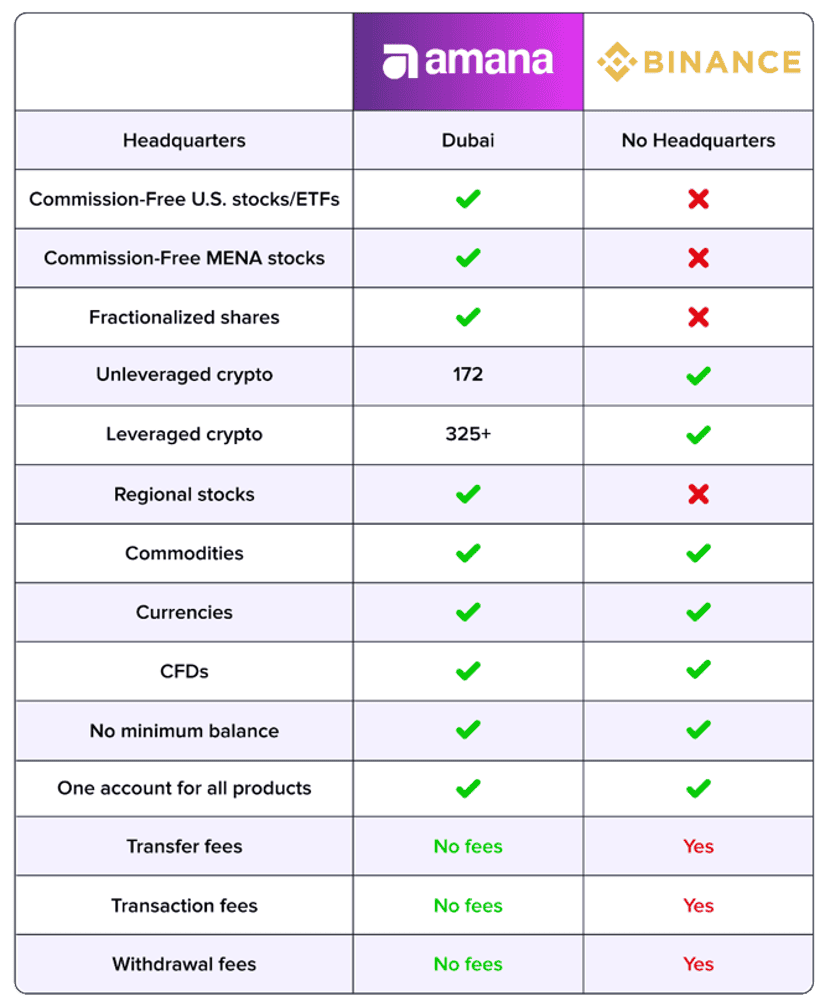
The platform remains heavily focused on cryptocurrency markets and digital assets. It does not provide access to traditional investment markets, such as U.S. stocks, ETFs, regional equities, or major indices like the NASDAQ-100.
For traders looking to build long-term portfolios across multiple asset classes within a single account, this narrower scope may feel limiting compared with platforms designed as broader multi-asset ecosystems.
While Binance is known for relatively tight spreads on major cryptocurrencies, commissions and other trading fees may increase overall costs for more active traders. Some users have noted fees on transfers, transactions, and withdrawals, which can add friction for traders seeking a single, cost-efficient, multi-asset platform.
While platforms like OKX and Binance can be powerful tools for crypto trading, they remain primarily focused on digital assets rather than offering a full investment ecosystem across global markets.
Key Difference vs amana:
Both Binance and amana provide access to major cryptocurrencies such as Bitcoin, Ethereum, and Solana. While Binance is known for tight spreads, it also applies trading commissions, which can increase the total cost of trading. amana incorporates costs into the spread without charging separate crypto trading commissions, which may result in a lower overall trading cost for many users.
Bottom Line
In the end, every trading platform serves a different type of user. Some focus heavily on leveraged CFD trading, others specialize in robo-investing or social trading, and a few are built primarily around cryptocurrency markets. Each can be useful in the right context — but many come with trade-offs, whether that’s higher fees, platform complexity, or limited access to certain asset classes.
For many investors, the ideal platform is simply one that’s easy to understand, easy to onboard, and allows them to access multiple global markets from a single account. That combination of simplicity, broad market access, and competitive pricing is exactly where platforms like amana stand out.
The good news is that the UAE’s trading ecosystem has never been stronger. With a growing number of regulated and innovative platforms available, investors today have more choice and transparency than ever before. The key is to find the platform that aligns with how you want to invest — and one that can grow with you over time.
Disclaimer
Please note that all the information presented in this article is accurate as of March 2026. While we have made every effort to ensure accuracy and provide up-to-date details, the dynamic nature of the financial markets may result in changes to the offerings or features of the trading platforms mentioned in this article.
Therefore, we advise readers to verify the latest information directly from the respective platforms before making any trading decisions. The content in this article is for informational purposes only and should not be considered as financial advice. Trading in the financial markets involves risk, and readers should conduct their own research and seek professional advice if necessary.
Frequently Asked Questions
How do I start trading online?
To start trading, you'll need to choose a trading platform, open an account, deposit funds, and select the asset you want to trade. From there, you can place an order and monitor your trade's performance.
What are the best online trading apps in the UAE?
The best online trading app for you depends on your individual needs and preferences. It's important to do your research and assess factors such as fees, products offered, user interface, customer support, and regulatory compliance before choosing a platform.
Which online trading app in the UAE is best for beginners?
For beginners looking to start either trading or investing, we recommend starting with a simple and user-friendly online trading app such as amana, Sarwa or Plus500. These platforms offer a range of educational resources and tools to help you learn the basics of trading.
Can I start trading with $100 or $1?
Yes, you can start trading with as little as $100 or even $1 on some platforms. However, this gives you a limited set of options for trading, and it might be challenging to avoid the risk of losing money.
Can I trade without a broker?
No, you cannot trade without a broker. Brokers provide access to trading platforms and execute trades on behalf of their clients.
What is the safest type of trading?
All trading involves risk, and it's important to carefully consider your investment objectives and risk tolerance before engaging in any trading activities. A simple rule, however, is to stay away from any leveraged products. These are not designed for new beginning investors, and new traders should use low leverage and take their time while they learn how they will navigate trading and timing the markets.
While long-term cash investing in low volatility products like low-cost index funds or ETFs is generally considered to be a safer approach that minimizes risk, it's crucial to conduct thorough research and consult with a financial advisor to determine the best investment strategy for your long-term investment horizon.
How much money do I need to start trading?
The amount of money you need to start trading depends on the platform and the products you want to access. Some platforms allow users to get started with very small amounts through fractional investing, while others may require higher minimum deposits depending on the account type or asset class.
Can I trade online for free?
Some platforms offer commission-free trading for certain products, such as ETFs or cryptocurrencies. However, keep in mind that other fees, such as spreads or financing charges, may still apply.
How can I learn to trade?
There are many resources available online to help you learn how to trade, including educational materials provided by trading platforms, online courses, and trading communities.
And if you are a beginner, consider trading with brokers that provide educational resources like amana and its partnership with Real Vision, CFI, and others. It's important to start with the basics and gradually build your knowledge and skills over time.
Is online trading profitable?
Online trading can be profitable, but it is not risk-free, and active traders that use leverage tend to lose out over time. Up to 80% of short-term active traders that use leverage when they trade end up losing money. It's important to have a solid trading plan and risk management strategy in place before trading, and to only trade with money you can afford to lose, and be aware of the impact of leverage!
Can you make money day trading?
Yes, it's possible to make money day trading. However, day trading involves high risk and requires skill, knowledge, and discipline to be successful.
Statistically, most traders who try to predict short-term price movements, i.e., day trading, do not make money. Leverage is often used in day trading, multiplying the risk of each trade — something many traders underestimate or struggle to fully understand.
Up to 80% of short-term active traders that use leverage end up losing money. Day trading is highly risky and should be approached with caution and patience using low leverage when starting and only with money you can afford to lose.
Is trading easy to make money?
No, trading is not an easy way to make money. It requires skill, knowledge and discipline, and it involves high risk.
There is a difference between trading and investing. Trading involves predicting market movement in shorter periods of time, and it is very difficult to maintain long-term profitability. Investing is a long-term proposition, and stocks and ETFs tend to be higher in value over time.
Up to 80% of short-term active traders that use leverage end up losing money. Day trading is highly risky and should be approached with caution and patience using low leverage when starting and only with money you can afford to lose.
How to day trade for beginners?
For beginners, we recommend starting with a simple and user-friendly platform such as amana, eToro or Plus500. It's also important to have a clear understanding of basic trading concepts, such as setting stop-loss orders and managing risk.
Developing a solid trading strategy and sticking to it is key. Remember, patience is a virtue in the world of day trading. Keep learning, analyzing markets, and adapting your approach as needed.
Up to 80% of short-term active traders that use leverage end up losing money. Day trading is highly risky and should be approached with caution and patience using low leverage when starting and only with money you can afford to lose.
| Related articles |
| Best online trading apps in UAE |
Download our app now
Take amana wherever you go.


All investment products carry risk.