THIMAR

27.91 SAR
+3.25%
Today
+3.80%
1D
Market is closed
Sun
9:00 AM ~ 2:00 PM
Mon
9:00 AM ~ 2:00 PM
Tue
9:00 AM ~ 2:00 PM
Wed
9:00 AM ~ 2:00 PM
Thu
9:00 AM ~ 2:00 PM
Fri
Closed
Sat
Closed
Information
Name
Thimar Development Leveraged
Currency
SAR
Core Leverage
1:2
Plus Leverage
1:2
Max Leverage
1:2
Overnight Fees Buy (Core Leverage)
-0.0167%
Overnight Fees Sell (Core Leverage)
-0.0167%
Overnight Fees Buy (Plus Leverage)
-0.0167%
Overnight Fees Sell (Plus Leverage)
-0.0167%
Overnight Fees Buy (Max Leverage)
-0.0167%
Overnight Fees Sell (Max Leverage)
-0.0167%
Market Cap
172.51M
Avg Daily Volume
99.08K
52 Week High
43.5 SAR
52 Week Low
24.7 SAR
Trading Hours
See hours
Overnight Fees Calculator
| Daily Overnight Fee % | Daily Overnight Fee $ | |
|---|---|---|
| BUYS | -0.01670% | $(0.167) |
| SELLS | -0.01670% | $(0.167) |
*Results displayed are estimates. Actual fees may differ from those shown as market conditions change.
Business Summary
Thimar Development Holding Company, together with its subsidiary Wasmi and Thimar Meat Company, produces, wholesales, and retails meat products in the Kingdom of Saudi Arabia. The company manages subsidiaries; invests funds; leases industrial property rights; and provides loans, guarantees, and financing services. It also holds underlying real estate and movable properties, as well as industrial property rights. The company was formerly known as National Agricultural Marketing Company and changed its name to Thimar Development Holding Company in October 2021. Thimar Development Holding Company was founded in 1987 and is based in Riyadh, the Kingdom of Saudi Arabia.
Top News
ALABDULLATIF.OTC
+2.32%
ALBABTAIN.OTC
+0.09%
ALBAHA.OTC
+1.72%
ALBILAD
+2.00%
ALHAMMADI.OTC
+1.67%
ALJAZIRA.OTC
+1.23%
ALKHALEEJ.OTC
+2.70%
ALMAJED.OTC
+4.04%
ALSAGR.OTC
+2.27%
AMAK
+7.27%
ARABIAINSURANCE.OTC
+2.68%
ASTRA.INDUSTRIAL
+1.43%
ATAA.OTC
+1.57%
BATIC
+5.33%
BAWAN.OTC
+4.87%
BONYANREIT.OTC
-2.15%
BUPA.OTC
+1.16%
CARE.OTC
+3.19%
CHUBBARABIA.OTC
+4.94%
DALLAH.OTC
+2.27%
EIC.OTC
+4.08%
EPCEMENT.OTC
+0.83%
FITAIHI.OTC
+0.53%
GASCO
+11.33%
HALWANI.OTC
+2.66%
MAKKAH.OTC
+0.16%
MEPAPER.OTC
+6.24%
MOATIBOOK.OTC
+5.09%
MOUWASAT.OTC
+1.68%
NADEC.OTC
+1.57%
NGC.OTC
+2.45%
National.Metal
+4.63%
RIYADHCABLE.OTC
+2.05%
SADR.OTC
+3.94%
SAIC.OTC
+3.07%
SAUDICEMENT.OTC
+0.00%
SAUDICERAMIC.OTC
+3.55%
SAUDIDAIRY.OTC
+0.96%
SHAKER.OTC
+3.36%
SHARQIYAHDEV.OTC
+1.25%
SINAD.OTC
+2.98%
SNB
+2.61%
TABUKCEMENT.OTC
+0.72%
TECO.OTC
+0.49%
THIMAR.OTC
+3.72%
WAFRAH.OTC
+5.87%
YCC.OTC
-4.31%
YSCC.OTC
+0.72%
ZAIN.KSA
+1.74%
ZAMIL.OTC
+1.80%
TASI: 58 stocks, 2 REITs slump to 52-week lows
Argaam
1w ago

THIMAR.OTC
+3.72%
ALARABIA
+3.84%
ALLIEDINSURANCE.OTC
+4.36%
PERFECTP.OTC
+2.78%
RASAN.OTC
+2.13%
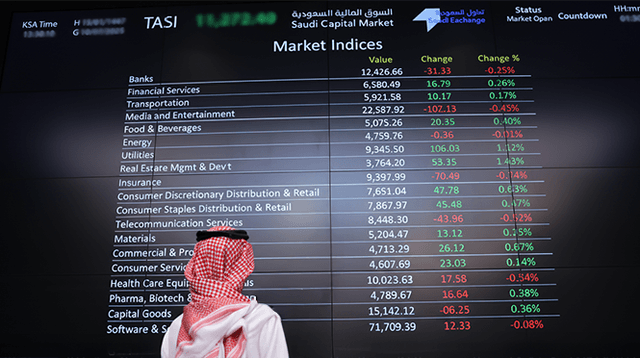
FTSE Russell implements periodic changes in Saudi market today
Argaam
1mo ago
THIMAR.OTC
+3.72%
Thimar board approves subsidiary name change
Argaam
2mo ago

Show more
Frequently Asked Questions
What does defensive trading mean?
Defensive trading means investing in stocks or assets that are less sensitive to economic cycles and tend to perform steadily during market downturns, such as utilities, healthcare, and consumer staples. It’s a strategy to protect your portfolio from volatility and losses during uncertain or declining markets.
Why are utilities a defensive sector?
Utilities are a defensive sector because they provide essential services like electricity and water that people need regardless of the economy, so their demand remains stable even during economic downturns. This stability leads to steady revenues and dividends, making utilities less volatile compared to other sectors.
What are defensive stocks?
Defensive stocks are shares of companies that provide essential goods or services, such as utilities, healthcare, and consumer staples. These stocks tend to remain stable and perform well even during economic downturns because their products are always in demand.
How do you trade defensively?
To trade defensively, focus on investing in stable, low-volatility stocks like utilities, healthcare, and consumer staples that perform well during market downturns. Also, diversify your portfolio, avoid high-risk bets, and consider using strategies like stop-loss orders to protect against big losses.