BTU

24.95 USD
+1.13%
Today
+2.42%
1D
Market is open
Sun
Closed
Mon
3:00 AM ~ 12:00 PM
Tue
12:00 AM ~ 12:00 PM
Wed
12:00 AM ~ 12:00 PM
Thu
12:00 AM ~ 12:00 PM
Fri
12:00 AM ~ 12:00 PM
Sat
Closed
Information
Name
Peabody Energy Leveraged
Currency
USD
Standard Leverage
1X
Enhanced Leverage
3X
Overnight Fees Buy
-0.0190%
Overnight Fees Sell
0.0024%
Market Cap
3.02B
Avg Daily Volume
2.39M
52 Week High
41.14 USD
52 Week Low
20.06 USD
Trading Hours
See hours
Overnight Fees Calculator
| Daily Overnight Fee % | Daily Overnight Fee $ | |
|---|---|---|
| BUYS | -0.01900% | $(0.190) |
| SELLS | 0.00240% | $0.024 |
*Results displayed are estimates. Actual fees may differ from those shown as market conditions change.
Business Summary
Peabody Energy Corporation engages in the production of metallurgical and thermal coal. It operates through Seaborne Thermal, Seaborne Metallurgical, Powder River Basin, and Other U.S. Thermal segments. The company operates mines in New South Wales and Queensland in Australia and in Alabama and Wyoming in the United States; mining, preparation, and sale of thermal coal, sold primarily to electric utilities; surface mining extraction processes, coal with a lower sulfur content, and Btu; and mining sub-bituminous coal deposits. It also supplies coal primarily to electricity generators, industrial facilities, and steel manufacturers. The company was founded in 1883 and is headquartered in Saint Louis, Missouri.
Top News
Peabody
+2.42%
Glencore.Xstrata
-0.29%
GEOPOLITICS | Glencore, Peabody and Heeney Consider Coal Projects in Venezuela
tradingview.com
1w ago

Peabody
+2.42%
Uranium.Energy
-0.22%
National.Energy
+0.17%
Patterson-UTI
-0.71%
Energy.Fuels
+0.20%
Weatherford.International
-0.21%
These ten energy stocks suffered the steepest September declines
tradingview.com
1w ago

Peabody
+2.42%
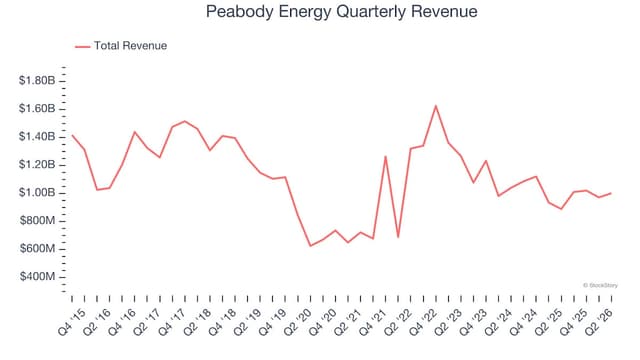
Peabody Energy (BTU): Buy, Sell, or Hold Post Q2 Earnings?
finance.yahoo.com
1w ago
Show more
Frequently Asked Questions
What is energy trading?
Energy trading is the buying and selling of energy commodities like electricity, natural gas, oil, and renewable energy. Traders aim to profit from price fluctuations, manage supply and demand, or ensure stable energy delivery across markets.
What are the 4 types of trading?
There are four main types of trading: scalping, which involves quick, small-profit trades; day trading, where positions are opened and closed within the same day; swing trading, which holds trades for days or weeks to catch market swings; and position trading, a long-term approach based on broader market trends.
What is trading in oil and gas?
Trading in oil and gas is the buying and selling of crude oil, natural gas, and their products, either physically or through financial contracts, to manage supply, demand, and price risks in the energy market.
How profitable is energy trading?
Energy trading can be highly profitable but is also very risky due to volatile prices.